
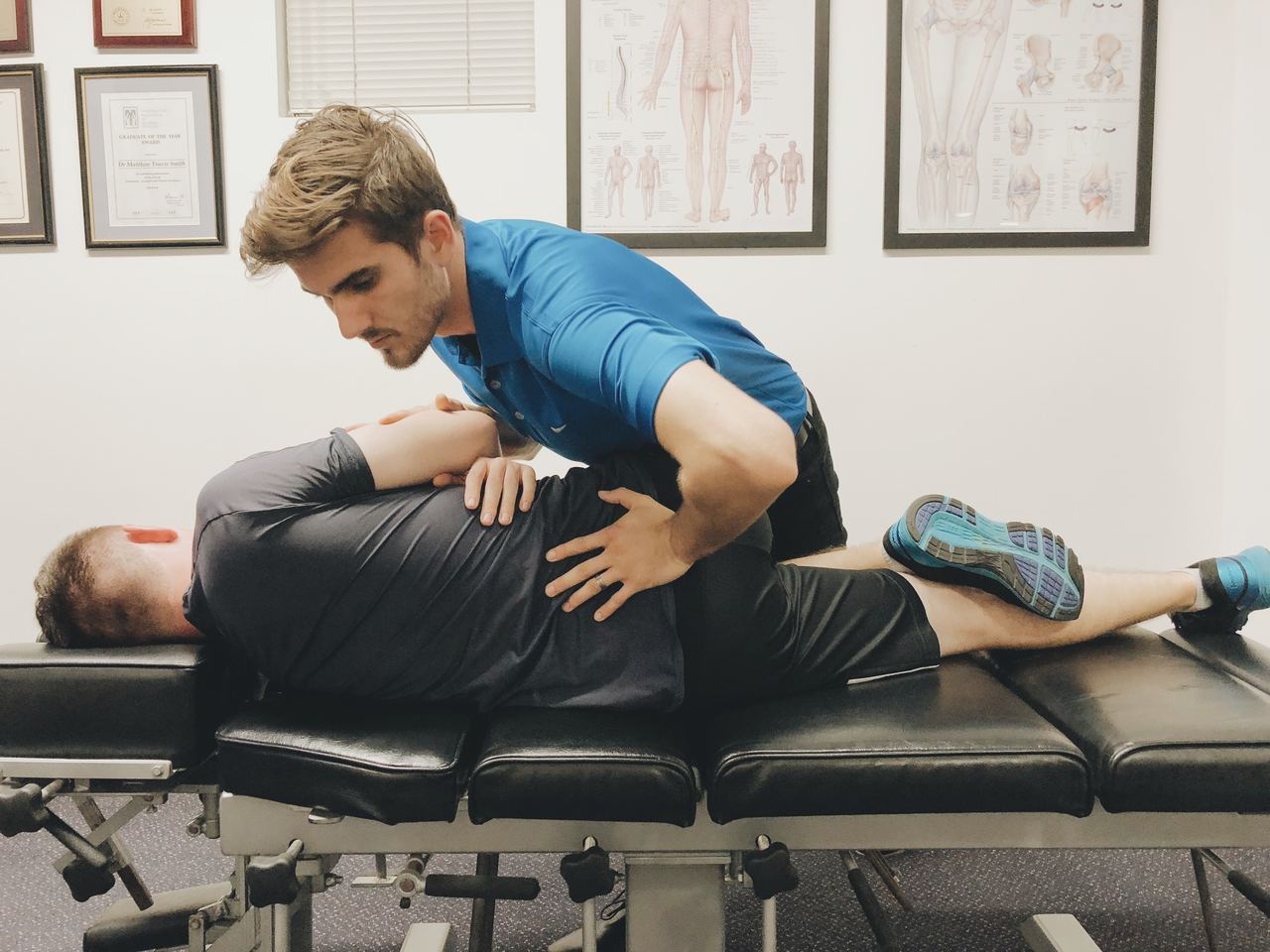
Shoulder pain that limits your movement, interrupts sleep, or won't resolve on its own? Our Sunshine Coast chiropractors and physiotherapists treat the full range of shoulder conditions at Mooloolaba and Nambour - and the diagnosis always comes first.
Shoulder pain rarely has a single, obvious cause - and that's what makes it so frustrating to self-manage. The shoulder complex involves the glenohumeral joint, the acromioclavicular (AC) joint, the rotator cuff tendons, the subacromial bursa, the scapula, and the cervical and thoracic spine. Pain in the shoulder area can come from any of these, or from a combination.
Common causes include rotator cuff strains and tears (the supraspinatus tendon is most often involved), shoulder impingement (where tendons are compressed in the subacromial space), frozen shoulder (adhesive capsulitis, with progressive stiffening and severe pain), AC joint injury or arthritis, bursitis, labral tears, and referred pain from the cervical spine or brachial plexus.
Getting the diagnosis right matters here. A rotator cuff tear, impingement and frozen shoulder all cause shoulder pain but need different treatment approaches. A thorough assessment - combined with digital X-ray when indicated - is the starting point at Absolute Health.
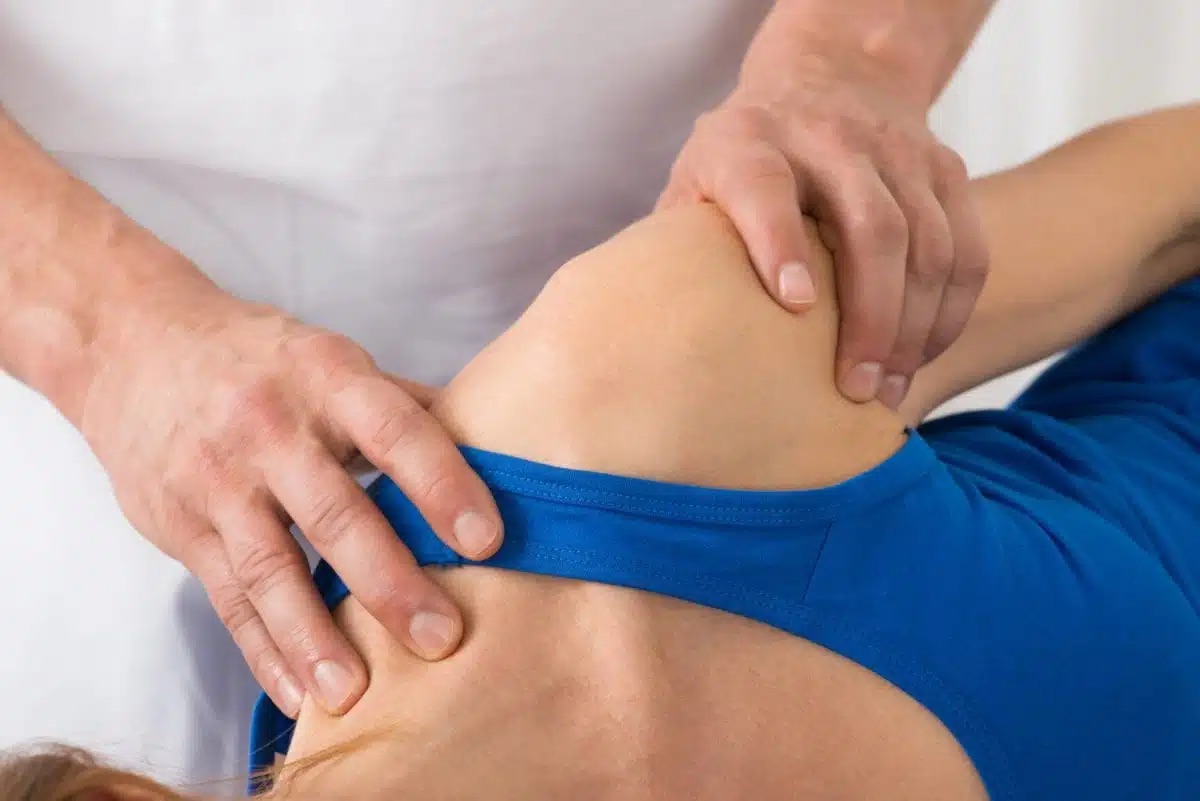
The shoulder is the most mobile joint in the body - and that mobility comes at the cost of stability. Understanding which structure is involved shapes the entire treatment approach.
The shoulder doesn't work in isolation. Here's how each approach addresses it - and why the cervical and thoracic spine often need to be part of the picture.
The cervical spine (particularly C4-C6) and the upper thoracic spine contribute more to shoulder symptoms than many people realise. Stiffness through the mid-back affects shoulder blade mechanics and can create impingement-type pain even when the shoulder joint itself is structurally intact. Nerve pain originating at C5-C6 commonly refers to the shoulder, upper arm and into the hand.
Chiropractic assessment looks at the whole kinetic chain - neck, mid-back, shoulder blade position and glenohumeral joint - rather than just the site of pain. Digital X-ray at our Mooloolaba clinic gives us a structural view of the AC joint, glenohumeral space and cervical contribution.
Physiotherapy for shoulder pain focuses on the joint, rotator cuff and rehabilitation. A physiotherapist will assess rotator cuff strength and integrity, scapular control, capsule stiffness and bursal irritation, then build a targeted program.
For most shoulder conditions, rehabilitation is the cornerstone of recovery - whether that means strengthening the rotator cuff after a strain, regaining range of motion after frozen shoulder, or retraining scapular movement patterns after impingement. Dry needling to the rotator cuff, deltoid and surrounding muscles is often a key part of the acute management.
Not sure which to choose? Our chiropractors and physiotherapists work together in the same clinic - if you're unsure, just call and we'll point you in the right direction or combine both if that's what your case needs.
Your first consultation starts with a thorough assessment - we don't assume we know the cause before we've examined you.
Yes - particularly when the shoulder pain has a cervical or thoracic spinal component, which is more common than most people realise. Stiffness through the mid-back affects shoulder blade mechanics; dysfunction at C4-C6 can refer pain into the shoulder and arm. Chiropractic assessment looks at the whole kinetic chain, not just the shoulder itself.
It depends on what's driving your pain. A cervical or thoracic contribution responds well to chiropractic. Rotator cuff rehabilitation, scapular strengthening and frozen shoulder management are typically led by physiotherapy. The advantage at Absolute Health is that both practitioners are under one roof - we'll direct you to the right one, or combine both where your presentation warrants it.
Mild rotator cuff strains often settle within a few weeks of appropriate management. Impingement typically takes 6-12 weeks with consistent rehabilitation. Frozen shoulder is the longest - it can take 12-24 months to resolve fully, though treatment accelerates recovery through each phase. We'll give you a realistic timeline based on your specific diagnosis after assessment.
Impingement occurs when the rotator cuff tendons are compressed under the acromion, causing pain with specific movements (especially reaching overhead or behind). Frozen shoulder (adhesive capsulitis) involves progressive inflammation and thickening of the joint capsule, leading to severe loss of range of motion in all directions - not just with specific movements. The treatment for each is quite different.
The majority of shoulder conditions - including most rotator cuff tears, impingement and frozen shoulder - resolve with conservative care. Surgery is considered for complete full-thickness tears, cases that don't respond to 3-6 months of conservative treatment, or for specific labral or instability issues. We'll be direct with you about whether what we're seeing is likely to respond to conservative care, or whether a surgical opinion is warranted.
Yes, if you have a Medicare Chronic Disease Management (CDM) referral from your GP. Shoulder conditions associated with a chronic diagnosis may qualify for up to 5 allied health visits per year at no cost. Learn more about bulk billing at Absolute Health.
Same-day appointments available at Mooloolaba and Nambour. Book online or call us - we'll assess the shoulder properly and give you a clear plan.
We'll get back to you shortly · or call (07) 5478 2333