
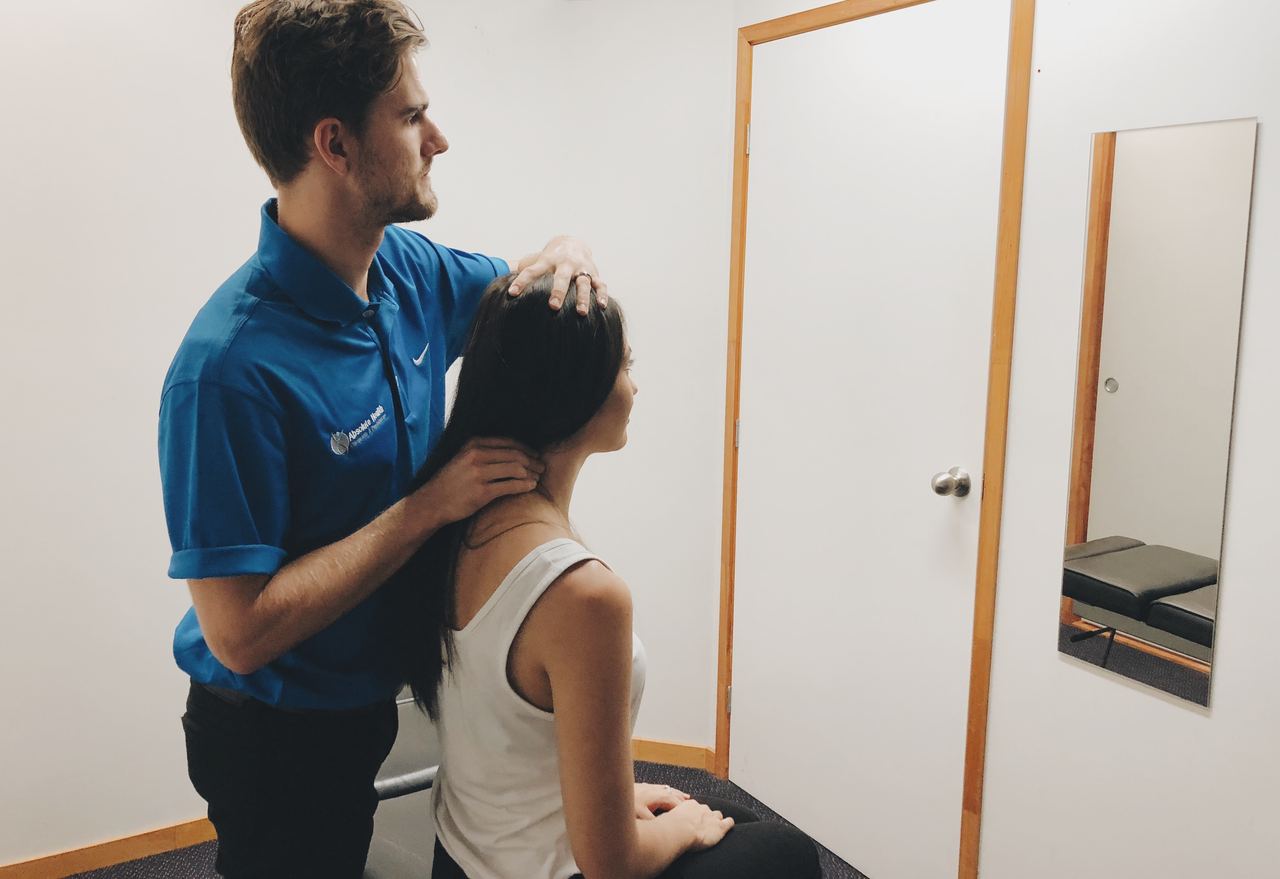
Recurring headaches that keep coming back? Whether they're building from the back of your neck, triggered by posture, or wrapping around to the eye - our chiropractors and physiotherapists at Mooloolaba and Nambour assess and treat the cause, not just the symptom.
Most headaches are managed with painkillers, rest, and waiting. But recurring headaches - the ones that keep coming back, that build from the base of the skull, or that flare after a day at a desk - often have a musculoskeletal origin that responds well to chiropractic and physiotherapy care.
The main types we treat are cervicogenic headaches (arising from dysfunction in the upper cervical spine, particularly C1, C2 and C3), tension-type headaches driven by chronic muscle tightness in the neck, scalp and suboccipital muscles, and headaches associated with forward head posture, whiplash or sustained neck strain.
Not every headache has a spinal cause. If your headaches are new, severe, or come with visual changes, speech difficulty or confusion, see a GP first. But if they're recurring, postural or linked to neck stiffness - there is a good chance we can help.
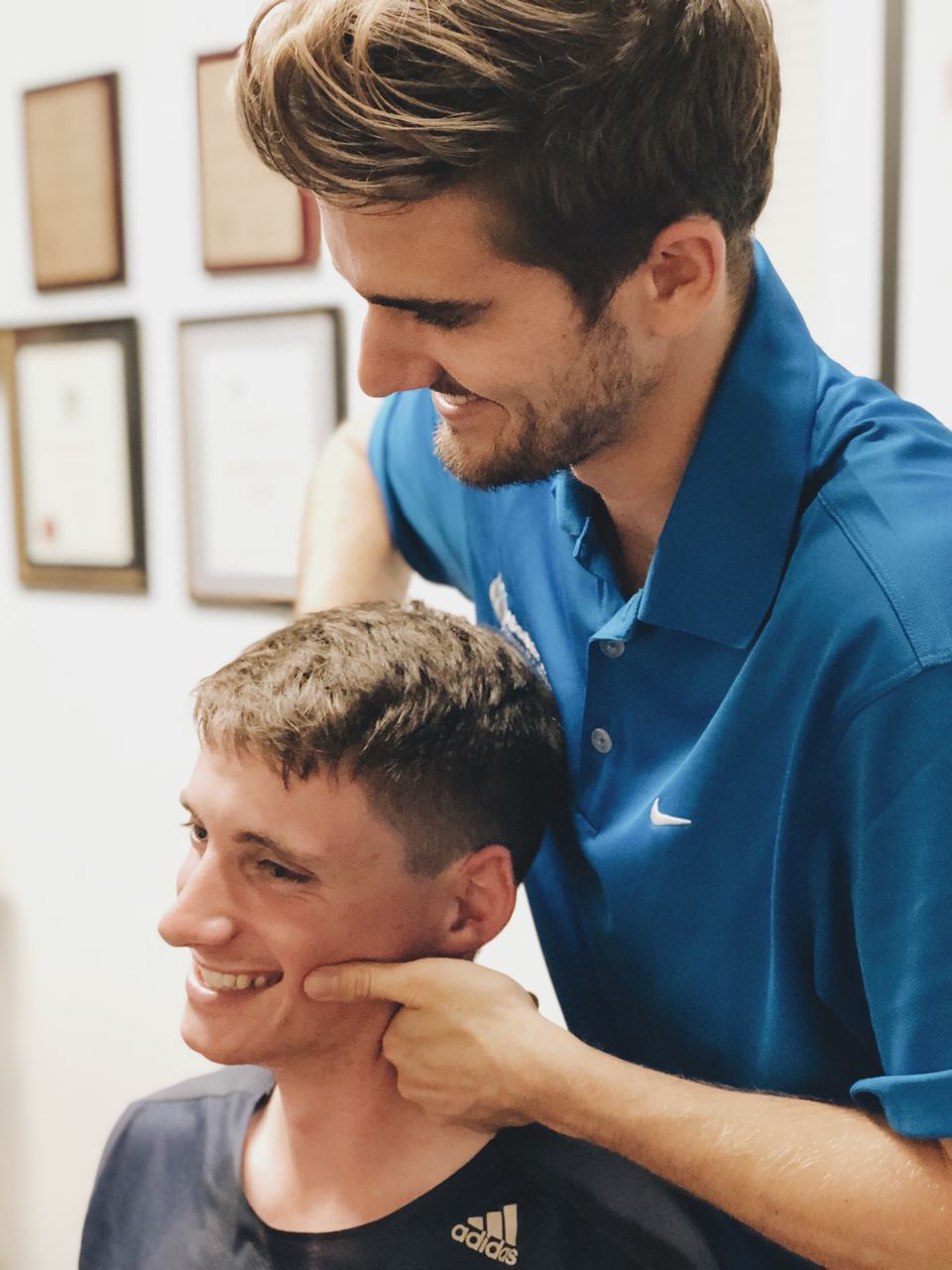
Dysfunction in the upper cervical joints (C1-C3) can refer pain to different regions of the head - a pattern well-documented in clinical research as cervicogenic headache.
Cervicogenic and tension-type headaches both respond to manual therapy - but the focus differs. Here's how each approach works, and why having both in one clinic helps.
The upper cervical spine from C1 to C3 supplies the joints and muscles around the base of the skull - and dysfunction here is a primary driver of cervicogenic headaches. Chiropractic care focuses on identifying restricted or hypomobile segments in the upper cervical spine and restoring their movement with targeted adjustments.
At our Mooloolaba clinic, on-site digital X-ray lets us assess cervical alignment and identify any structural contributors. MotionIQ analysis reveals how your cervical spine is moving across its full range - useful for pinpointing where dysfunction is concentrated.
Physiotherapy addresses the muscular, neural and movement components of headache. A physiotherapist will assess deep neck flexor strength, upper trapezius and suboccipital muscle tension, thoracic posture and jaw alignment - all of which contribute to recurring headaches when compromised.
Treatment is hands-on: manual therapy to the upper cervical and thoracic spine, dry needling to trigger points in the neck and scalp, and a targeted exercise program to build the deep neck stability that prevents recurrence.
Not sure which to choose? Our chiropractors and physiotherapists work together in the same clinic - if you're unsure, just call and we'll point you in the right direction or combine both if that's what your case needs.
Your first consultation starts with a thorough assessment - we don't assume we know the cause before we've examined you.
Yes - particularly for cervicogenic headaches, which arise from dysfunction in the upper cervical spine. Chiropractic care uses targeted adjustments to the C1-C3 region to restore joint movement and reduce the nerve and tissue irritation that drives this type of headache. Many of our Sunshine Coast patients find that consistent chiropractic care significantly reduces both the frequency and intensity of their headaches.
Yes. Physiotherapy is particularly effective for tension-type headaches and postural headaches driven by muscle imbalance, deep neck flexor weakness, or thoracic stiffness. Manual therapy, dry needling and targeted exercise address the underlying drivers rather than just managing symptoms.
A cervicogenic headache is a headache that originates from the cervical spine - specifically the upper cervical joints, muscles and nerves around C1, C2 and C3. The pain is referred from these structures to the head, following predictable patterns. It often feels like a dull ache starting at the base of the skull and spreading forward, and is typically one-sided. Neck stiffness or pain that precedes or accompanies the headache is a hallmark sign.
Common indicators include headaches that start at the base of the skull, are preceded or accompanied by neck pain or stiffness, are triggered or worsened by sustained postures or looking down for extended periods, tend to be one-sided, or respond (temporarily) to neck movement or massage. A clinical assessment is the most reliable way to determine whether your headache has a cervical component.
It depends on how long you've had the headaches, how frequent they are, and what's driving them. Postural and tension-type headaches that are relatively recent often respond within a handful of visits. Long-standing cervicogenic patterns typically take longer and may need an ongoing maintenance component. After your initial assessment, we'll give you a realistic estimate rather than a generic plan.
Yes, if you have a Medicare Chronic Disease Management (CDM) plan from your GP. If your headaches are associated with a chronic musculoskeletal condition, your GP may be able to refer you for up to 5 allied health visits per year at no cost. Learn more about bulk billing at Absolute Health.
Same-day appointments at Mooloolaba and Nambour. Book online or call us - we'll identify the source and put together a treatment plan that actually addresses it.
We'll get back to you shortly · or call (07) 5478 2333